What would you do if the internet went down?
Most of us use it daily for writing, reading, communication, and entertainment. What would you do all day when you have no internet access and no cellular connection? How would you communicate and get information? Have you ever experienced an unexpected disruption due to power or internet outages?
This could happen while in a remote location or due to a storm or you lost or washed your phone in the washing machine. Do you have a hard time putting it down or living without it ? How long would you be able to go without internet access before you had real issues? Like bank access or lack of communication with important people ?

Do you have backup methods ? Have you ever decided to take a day or more off from devices? Was it difficult? Do you remember the old ways of communicating and getting information and taking care of business? Do you have a list of important phone numbers and addresses, a landline, a radio, a network of local friends, a bank with a physical location near you, paper bills? Can you entertain yourself without internet and technology? What if there were no saved videos or kindle or games allowed either?
This more than a thought experiment. Temporary internet access disruption is a possible, if not likely, scenario and we should all have a backup plan. We should not let ourselves become completely dependent upon technology that we cannot control. Taking a day or two off will help you discover your vulnerabilities, as Texas did during the Big Freeze. A loss of electricity would of course make things much more complicated than just losing internet. Winter is coming again soon.
What could happen? Service outages actually happen quite often. For example, Amazon’s servers have been impacted many times as demonstrated in this timeline. This site also has a history of outages. Facebook has had some downtime, as well. This happened in 2015 and in 2021. Many other big sites including Google and Etsy and Firefox have had issues leading to disruption of access. Most of these were short-term, but the world freaked out when Facebook, Instagram and WhatsApp were down for a few hours.
Internet access is a global political and economic issue. Despite current geopolitical turmoil, the interdependence of our global economy makes it less likely that any one country would want to do stop global trade from functioning. However, an unintended internet disruption in one country can also impact other countries. And there is always the risk of terrorists and extremists who care more about their ideology than about the lives of billions of people . Plus, this very interdependence can cause global supply chain disruptions even if the internet outages themselves aren’t global. And governments have used internet access restriction as a way to control their citizens.
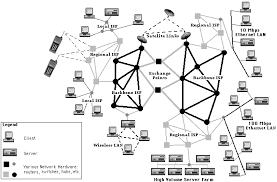
What we call the internet is a actually a complex global network composed of many interconnected networks and data centers. Several factors can lead to internet outages or disruptions for which our government has invested billions to prevent and remedy quickly:
- Network Failures: Hardware failures, software bugs, or misconfigurations in routers, switches, and other networking equipment can lead to local or widespread outages.
- Natural Disasters: Earthquakes, hurricanes, floods, and other natural disasters can damage the physical infrastructure that supports the internet, such as undersea cables, data centers, and cell towers.
- Cyberattacks: Malicious actors can launch distributed denial of service (DDoS) attacks or cyberattacks that overwhelm websites, services, or even entire networks, causing them to go offline.
- Technical Issues: Technical glitches, software updates gone wrong, or issues with domain name systems (DNS) can result in temporary outages.
- Policy or Regulatory Actions: Governments or regulatory bodies could implement measures such as internet shutdowns, filtering, or censorship that restrict or disrupt access to online services.
- Overloading: Heavy usage during peak times, like during major events or sudden surges in online activity, can strain network capacity and cause slowdowns or outages.
- Backbone Failures: The internet’s backbone, which consists of high-capacity communication lines, routers, and data centers, can experience failures that impact large portions of the network.
- Economic Factors: Financial troubles faced by internet service providers (ISPs) or companies hosting online services could lead to disruptions if they’re unable to maintain their operations.
- Electromagnetic Pulses (EMPs): An EMP is a burst of electromagnetic radiation that can potentially disrupt or damage electronic devices and infrastructure. EMPs can be caused by natural phenomena (such as solar flares) or by human-made devices (nuclear weapons detonated at high altitudes). EMPs could potentially affect power grids, communication networks, and electronic devices. The impact of an EMP on the internet would depend on the strength and proximity of the pulse, the resilience of the affected infrastructure, and the extent of preparedness and mitigation measures in place. While EMPs have the potential to cause significant disruptions, the specific outcomes would vary based on the circumstances.
While complete and prolonged global internet outages are relatively rare, localized disruptions and slowdowns can occur more frequently.

This is not meant to be an alarmist or fear-mongering post. History has already shown us that outages happen and many of us have experienced temporary loss of internet and found it to be at the least inconvenient. Hopefully we will never have a widespread, prolonged disruption of the internet-dependent global communication and financial system, but it’s a good idea to have alternative methods of performing our daily routines.
Here are some steps you can take to prepare for a week or more without internet access caused by unexpected circumstances:
- Communication Plan:
- Establish alternative communication methods, such as landline phones, two-way radios, or messaging apps that work over cellular networks.
- Share contact information with family, friends, and neighbors, so you can stay in touch even if the internet is unavailable.
- Offline Information:
- Keep a printed list of important contacts, addresses, and phone numbers.
- Have physical maps of your area and any relevant evacuation routes.
- Offline Entertainment and Information:
- Gather books, board games, puzzles, and other forms of entertainment that don’t require an internet connection.
- Download movies, music, podcasts, and e-books in advance to enjoy offline.
- Local Data Storage:
- Regularly back up important digital files, documents, and photos to external hard drives or portable storage devices.
- Use cloud storage services to store important files and access them offline if available.
- Battery Power and Charging:
- Keep portable chargers or power banks for your devices to maintain communication and use electronic devices during power outages.
- Consider solar chargers for longer-term power needs.
- Emergency Supplies:
- Stock up on non-perishable food, clean water, and necessary medications to sustain yourself and your family during the outage.
- Have flashlights, batteries, candles, and matches in case of power failures.
- Offline Planning Tools and materials:
- Use physical planners, notebooks, and calendars to keep track of appointments, tasks, and important dates.
- If you’re a student or need to work remotely, consider downloading relevant course materials, lectures, or work-related documents in advance.
- Emergency Information:
- Stay informed about local news, weather updates, and emergency alerts through traditional media sources like non-internet radio or a TV equipped with a digital antenna.
- Community Support:
- Connect with neighbors and community organizations to share resources, information, and support during an outage.
 Blue Skies and Green Pastures
We had a huge windstorm at our old home and our power was out for a couple days. It was scary, but we got through it.
I bet you were relieved when it came back on. Houston was hit by a huge storm and flood in 2017 that knocked out power for several weeks in the hot summer. My mom had to use a gas generator for fans and fridge . They couldn’t buy gas because the pumps didn’t work! She had to drive 50 miles each way to a gas station. It was a crazy time.
Wow, that would be so difficult. Our big issue was not opening the fridge very often.
I use my phone for music, podcasts, writing, reading, etc. Thankfully, I grew up in a world of print books, old-fashioned radio, writing on a typewriter, researching at the library, etc. If things get really bad, I do have a stock of pens, pencils, papers, print books, and my accordion. The food system is a little more difficult to navigate, as the garden is currently only producing jalapeños and chiles. And if the system goes down, the food supply will be the most important to find alternatives for. But otherwise, I can walk anywhere I need to go.
My jalapeño plants are trying to hang on , but they aren’t producing in this heat.
We had no internet a few months back. My husband was luckily in the office or he wouldn’t have been able to work. I couldn’t write, because the programs I use are internet based. I know there were a bunch of things I was stymied on, and it just made general life more difficult because of Ho often I use the internet for checking things.
Ugh. How long was it unavailable?
Only about 12 hours but it felt like days. It’s amazing how much of my day requires the internet. I couldn’t check on an Amazon refund, or book my class at the gym, or make a grooming appointment….we do so much online
Our routines really are very integrated into it . When my phone was broke , I had my laptop, but a lot of my apps are phone only or I couldn’t login to a web app without a text to my phone. I realized that is a problem.
I get it