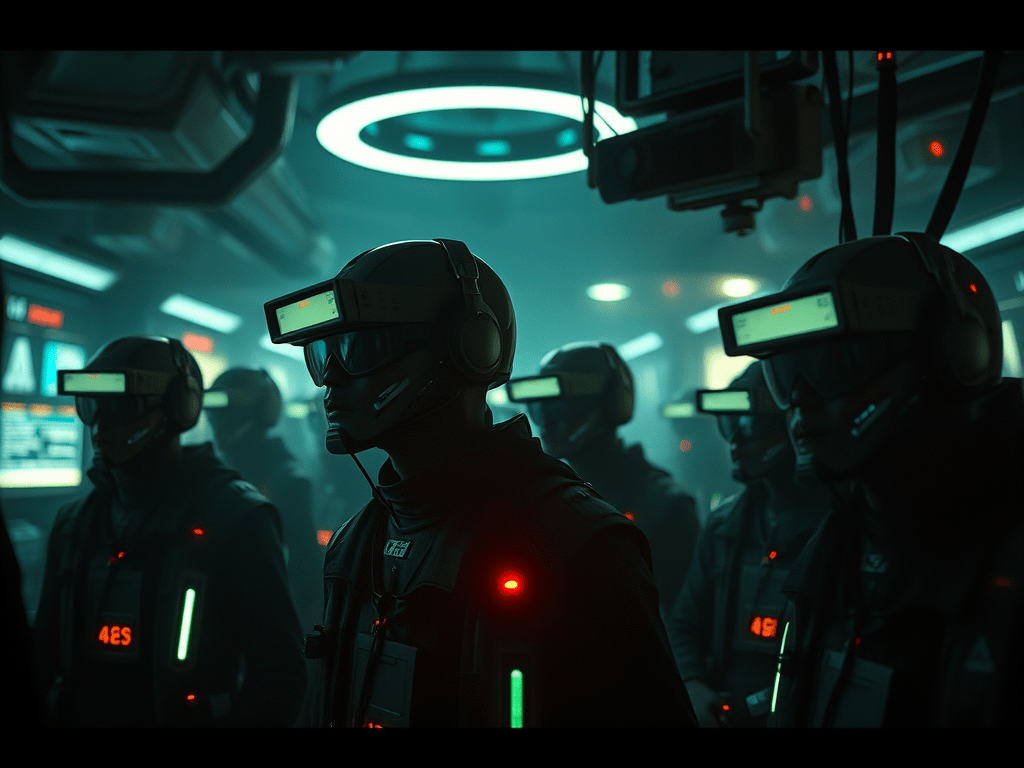
Future Shock, written by Alvin Toffler and published in 1970, explores the psychological and societal impacts of rapid technological and social change. Toffler’s main premise is that as technological advancements accelerate, they lead to what he terms “future shock,” a state of distress and disorientation in individuals and societies as they struggle to adapt to overwhelming changes. The book discusses how the pace of life, new technologies, and social changes contribute to this phenomenon, and it warns of the long-term effects of living in an ever-accelerating world without adequate preparation.
In Future Shock, Alvin Toffler predicted several trends that have since become reality, including:
- Information overload – Toffler foresaw that people would be overwhelmed by the sheer volume of information in the future, which is now evident with the internet and 24-hour news cycles.
- Rise of temporary and freelance work – He predicted the shift away from lifelong careers with single employers to a more flexible, gig-based economy, which we now see with freelancing platforms and the gig economy.
- Technological displacement – Toffler warned of technology replacing jobs, a reality today with automation and AI impacting industries.
- Virtual and remote interactions – He anticipated a future where people would rely more on virtual communications rather than face-to-face interactions, which has materialized with the rise of video calls, social media, and remote work.
- Difficulty adjusting to rapid change-He expected that many people, especially older people, would struggle to adjust as the pace of job market and cultural change increased, which has been true.
These examples illustrate how Toffler’s predictions, made over 50 years ago, before the worldwide web and globalization, have largely come to fruition in today’s world.
Now, in 2024, as we lurch towards the next technological revolution, an AI mediated, surveilled and generated world, soon to be paid for by digital currency and manufactured by a robotic workforce, humans are struggling once again to adapt or perish. Even futurist experts are unsure whether these changes will benefit mankind or lead us into techno-slavery.
A minority of the population is well positioned to prosper in the brave new world, but those lacking technological skills will find themselves competing for limited opportunities in health care, education, and government jobs. And the risk is that the rest of us will either be dependent on universal income payments or living in multi family housing pooling their funds to survive.
If the cost of living continues to rise to meet the spending power of the millionaire class, the dystopian world of sci-fi novels will soon become reality with a wealthy elite and a majority class of slaves controlled by robot soldiers. The only way to prevent this is to…..? I don’t know.
The rise of artificial intelligence (AI) has been touted as the next great revolution, promising economic growth and a future filled with unprecedented innovation. The phrase “a rising tide lifts all boats” reflects the idea that the financial success generated in one part of the economy will trickle down, benefiting everyone. However, this optimistic vision fails to account for a stark reality: not everyone has the ability, resources, or opportunities to benefit from the AI boom.
A Narrow Definition of Success
The tech world, and particularly the AI sector, has historically been dominated by a specific type of thinker: individuals with strong math skills, entrepreneurial mindsets, and often, a background in computer science or engineering. These fields tend to attract certain kinds of problem solvers, logical thinkers, and creative innovators, all of whom play a crucial role in driving AI’s progress. However, this leaves out vast segments of the population who don’t fit this mold.
AI development requires a combination of technical expertise, data literacy, and access to resources that many people simply don’t have. While the industry is rich with opportunities, those opportunities are often only accessible to a select few. Just because the tech world offers limitless possibilities doesn’t mean everyone has the tools, knowledge, or mental capacity to seize them.
The Reality of Limited Aptitude and Access
One of the primary challenges is aptitude. Math and computer science skills, crucial for working in AI, are not universally available or easily learned. Many people struggle with math, either because they didn’t have adequate educational support or because they simply don’t have a natural inclination for it. While AI may hold tremendous promise, the average person isn’t equipped to jump into a field dominated by algorithms, neural networks, and advanced programming languages.
Beyond skills, there’s also an issue of access to information. The most successful AI entrepreneurs and innovators often have privileged access to cutting-edge research, elite networks, and the financial capital necessary to launch AI ventures. For those without such resources, the barriers to entry are high, if not insurmountable.
The “Tech Class” Divide
The AI boom is part of a broader trend of wealth concentration within the tech industry. A relatively small group of individuals—entrepreneurs, venture capitalists, and tech workers—are reaping the lion’s share of profits from AI innovations. Meanwhile, those outside the tech bubble, particularly in low-wage service jobs, are seeing little benefit from AI’s financial success.
This divide isn’t new. Throughout history, technological revolutions have created significant wealth for some while displacing others. The Industrial Revolution, for example, improved productivity but left many workers in low-paying, exploitative conditions. AI may be creating new opportunities, but it’s also automating jobs and widening the gap between those with the skills to thrive in a tech-driven economy and those left behind.
Conclusion: The AI Boom is Not a Rising Tide for Everyone
AI has the potential to transform industries, create new opportunities, and generate enormous wealth. But believing that AI will “lift all boats” overlooks the complex reality of limited access, differing abilities, and systemic inequalities. For true progress to occur, we must focus on building an economy that values all kinds of contributions, not just those from the tech sector. Only then can we ensure that everyone has the chance to succeed in an increasingly AI-driven world, if this is even possible.
 Blue Skies and Green Pastures
There is no guarantee that what has happened before will happen again. However, technology prophets cannot predict the future either.
There are several things to keep in mind. Computers, including AI, don’t actually think. They process information and produce calculated results. Computer can be used very efficiently to perform repetitive tasks, but they don’t actually replace human beings. Someone still needs to monitor the computers.
Joe Biden made a career out saying what people wanted to hear. That is one reason he is such an awful president. He was almost always wrong. We don’t want to hear the truth.
Programing computers is not something that your average person or coalminer can do. Programming — true programing — is a kind of engineering job. It is akin to being an architect or a mechanical engineer. It takes talent and time to learn the job. Moreover, programming can be very specialized. Some people write programs to calculate spacecraft trajectories. Others write apps, and still others write operating systems.
Can we create interfaces that allow humans and computers to communicate directly with each other? What does that mean? It is one thing to design a system to allow someone whose spinal cord is broken to walk. It is something quite different to connect someone to a computer so that they can use that computer to help them think more efficiently.
How will AI affect the job market? Technology has traditionally created lots of new jobs and eliminated some jobs, and the people whose jobs were eliminated complained a lot. I suspect we will see more of the same. However, as computers eliminate the jobs that drudges do, the people who want to work are going to have to work harder to develop their gifts. Almost all of us are capable of doing something that a computer cannot do, and we are going to have to figure out what that is, and we will have to develop that gift.
I am not very optimistic. I see the world devolving into the Hunger Games eventually.