How do you feel about the idea of being tracked by your phone and other devices? Do you use Life360 or another GPS location-sharing service that tracks your whereabouts for your safety, or the safety of an elderly family member or child? The ability to monitor the location and certain activities of all people and internet-connected devices is rapidly approaching thanks to satellites. But many people already stay constantly connected to one or more devices because they do not live or travel in remote areas. Smartwatches and smartphones and GPS-locators on vehicles regularly track our locations.
To some people tracking may not seem like a big deal because it is optional and for your safety. This is evident by the over 48 millions users of Life360 and other location apps. And when used correctly, location-sharing and asset tracking can be very helpful and even save lives. However, for some employees, tracking is not optional. It has been possible to track the location of company-owned vehicles, laptops, and phones for years. For many this has been accepted as part of modern life.
But it is easy to imagine a future where tracking is required and abused by those in power, such as employers and governments and health organizations. We got a little taste of that with the Covid tracking apps. The technology and infrastructure was not yet in place to implement 100% surveillance during Covid. Now, however, numerous LEO satellites are being launched into space that will make it easier to track citizens during the next pandemic or crisis.
China’s social credit system uses tracking to monitor and evaluate the behavior of its citizens. This tracking can be done through a variety of means, including: internet activity, cell phone usage, financial transactions, and physical location. The government uses this tracking data to create a comprehensive profile of each citizen’s behavior. This profile is then used to determine a citizen’s social credit score, which can have a significant impact on their life. For example, a low social credit score can make it difficult to get a job, rent an apartment, or travel.
In America, the government does not currently have the legal right to create such a social credit system. However, private companies have been using data to rate consumer risk for credit, jobs, health and life insurance, and lease agreements for a long time. The more data they collect on our private lives and habits, the better they can decide which people are a good risk and which aren’t. It is likely that tech surveillance will be used by private companies more and more before our government openly begins tracking us.
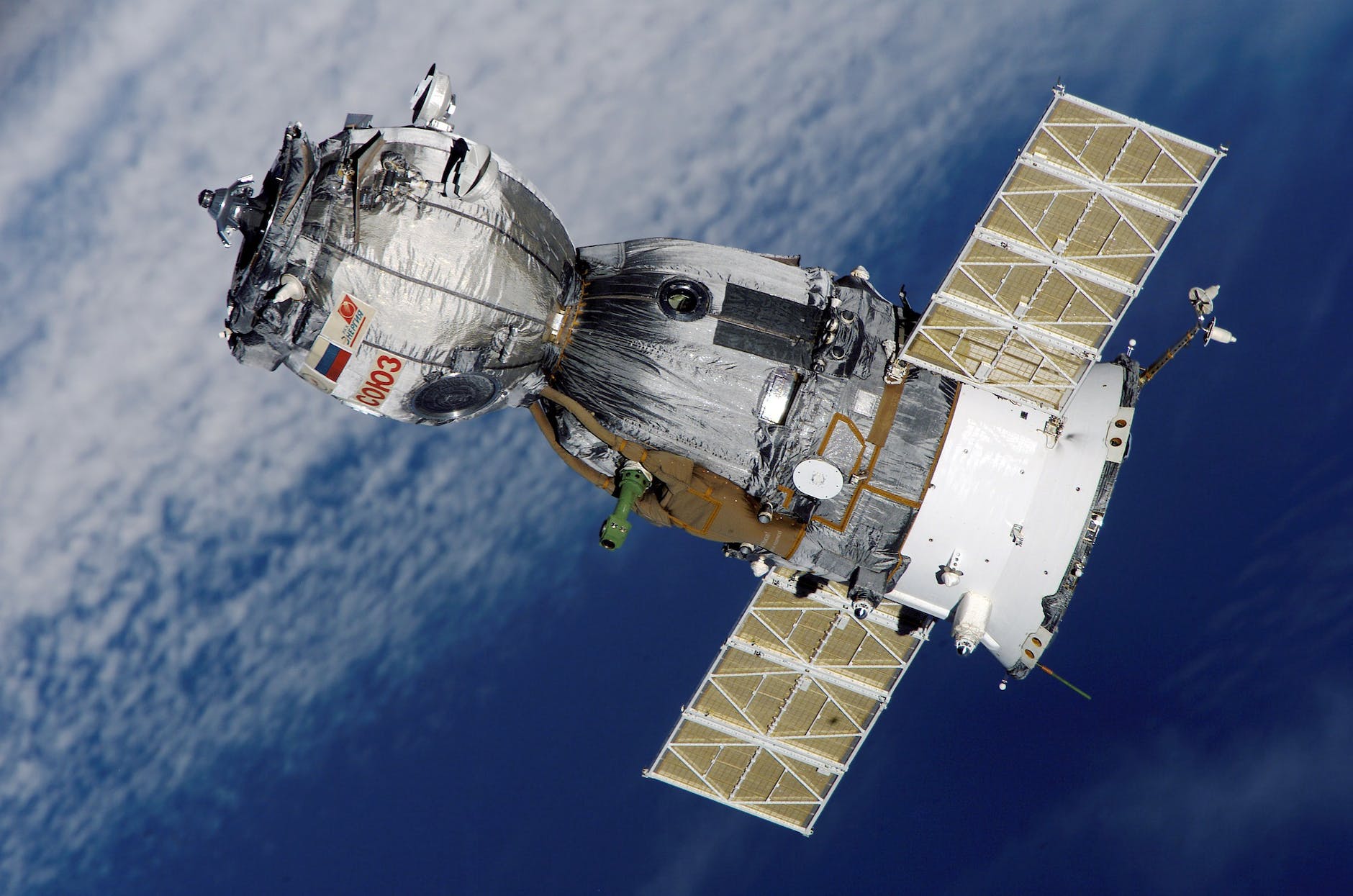
Bluetooth And LEO Satellites: The End of Privacy?
Technology is being developed by many companies to make data collection easier. Hubble Network is a satellite startup that recently announced a $20 million Series A funding round. The company plans to use this funding to launch a satellite constellation that will allow Bluetooth-enabled devices to connect to the internet, even when they are not within range of a cellular network. One of Hubble’s co-founders, Chris Hulls, is also a co-founder of Life360, the popular location-sharing service.
Hubble’s technology works by wirelessly uploading the company’s firmware to existing Bluetooth chipstacks. This firmware allows the devices to communicate with Hubble’s LEO satellites, which in turn can relay the data back to the ground.
Hubble Network is planning to launch a constellation of satellites to support its technology. The company plans to launch an initial batch of four satellites on SpaceX’s Transporter-10 rideshare mission in January 2024. These satellites will be used to test the company’s technology and to gather data on the performance of the satellites in orbit. Once the initial batch of satellites is launched, Hubble Network plans to launch a constellation of 300 satellites to provide global coverage.
Hubble Network’s satellites will be equipped with a variety of sensors, including GPS, cameras, and sensors to measure environmental conditions. The data collected by these sensors will be used to track the location of assets, monitor environmental conditions, and collect data on a variety of other factors.
Hubble says that its technology has the potential to revolutionize the Internet of Things (IoT) market. Currently, many IoT devices are limited by their reliance on cellular networks. This can make them expensive to operate and difficult to deploy in remote areas. Hubble’s satellite network could solve these problems, making IoT devices more affordable and accessible to a wider range of users.
Hubble is not the only company working on satellite-based IoT connectivity. Other companies, such as Spire Global and Kepler Communications, are also developing similar technologies to allow internet connectivity in remote areas. Older versions of similar satellite tracking technology already exist. Orbcomm is a long-established satellite-based IoT network that was founded in 1995. It uses a constellation of 11 geosynchronous satellites to provide global coverage.
From Hubble’s website : “Hubble Network is building the world’s first global network that is easy to use, cost effective, and battery efficient. Our technology operates through a simple software framework, enabling any Bluetooth device to directly connect to our satellite network. This revolutionary approach allows any existing device to be retrofitted to transmit data to the Hubble Network with no additional hardware changes. Given that there are almost 5 billion devices sold per year with Bluetooth we have the potential to usher in a new era of connectivity, empowering businesses and individuals to unlock unprecedented possibilities in a truly connected world. From smart cities and industrial automation to healthcare and agriculture, innovation knows no bounds.”
Potential Uses for Hubble Network’s Technology
The idea is to create a network of satellites that can communicate with Bluetooth devices like smartphones, smartwatches, or other IoT gadgets. Hubble Network’s satellite constellation would enable Bluetooth devices to connect directly to the satellites. Instead of relying on traditional communication infrastructure like cell towers or Wi-Fi routers, the Bluetooth devices would establish a connection with the satellites orbiting above the Earth.
Hubble Network’s technology could work with smartphones and other devices that use cellular. The company’s satellite constellation could be used to provide connectivity to devices that are not within range of a cellular network. This could be useful for people who travel to remote areas or for people who work in buildings with poor cellular reception. However, it is important to note that Hubble Network’s satellite constellation is not a replacement for cellular networks.
Hubble Network’s technology has a wide range of potential uses. Some of the most promising use cases include:
- Asset tracking: Hubble’s technology could be used to track the location of valuable assets, such as shipping containers or livestock.
- Environmental monitoring: Hubble’s technology could be used with sensors to monitor environmental conditions, such as air quality or water levels.
- Smart cities: Hubble’s technology could be used to create smart cities, where sensors and devices are connected to the internet and can collect and share data in real time.
- Defense: The military relies heavily on satellite communications to operate effectively. Hubble Network’s technology could be used by the military to supplement or even replace existing satellite communication systems.
Hubble Network’s technology could be used for asset or human tracking in a number of ways. For example, it could be used to track the location of valuable assets, such as shipping containers or livestock. It could also be used to track the condition of assets, such as temperature or humidity. And it could be used to track the location of employees or private individuals who opt-in.
Here are some of the ways that Hubble Network’s technology could be used for tracking:
- Real-time location tracking: Hubble Network’s satellite constellation could be used to track the real-time location of assets or people. This could be useful for companies that need to track the location of their inventory or for businesses that need to track the location of their employees.
- Condition monitoring: Hubble Network’s satellite constellation could be used to monitor the condition of assets. This could be useful for companies that need to track the temperature or humidity of their assets or for businesses that need to track the wear and tear on their assets.
- Alerts and notifications: Hubble Network’s satellite constellation could be used to send alerts and notifications when assets are out of range, when assets reach a certain location, or when assets are in a certain condition. This could be useful for companies that need to be notified when their assets are at risk or for businesses that need to be notified when their assets are not being used properly.
In conclusion, privacy is becoming a thing of the past and not many people seem to care. Bad actors will no doubt find ways to avoid being tracked, and good people feel that they have nothing to hide anyway. Just like everything we look at and buy is part of a data set, our location and movements will also be monitored and recorded in real-time. Only time will tell if we will change our mind about constant connectivity and a life without privacy.
What do you think?
 Blue Skies and Green Pastures
Privacy IS ALREADY a thing of the past. And of course, the mantra for giving up what little is life will be “Safety, Security and Convenience.” Riiiight. 🙄
❤️&🙏, c.a.
Don’t forget diversity, equity and inclusion !