Mayors, Governors and Members of Congress
When we think about the role women play in American politics, it’s easy to focus on the progress made in local and city government, Congress and state governorships. Yet, when it comes to the highest office in the land—the presidency—the story has been one of incremental change, symbolic campaigns, and cultural shifts. Over the years, several women have bravely stepped into the political arena, vying for the most powerful position in the world. Although no woman has yet been elected President of the United States, the journey of these trailblazers provides a fascinating glimpse into the evolving landscape of American politics.
A Brief History of Women Presidential Candidates
The journey began in 1872 with Victoria Woodhull, the first woman to run for U.S. president. Representing the Equal Rights Party, Woodhull was a controversial figure who advocated for women’s suffrage and labor reforms long before they became mainstream issues. She supported birth control and eugenics, but not abortion. While her campaign was more symbolic than serious, and she was not quite legally old enough to run for president, it set the stage for future generations of women to challenge the status quo.

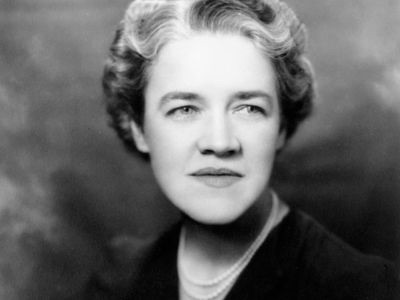
Fast forward to the 20th century, and women like Belva Ann Lockwood and Margaret Chase Smith emerged as candidates who pushed the boundaries further. Lockwood, running in 1884 and 1888 for the National Equal Rights Party, was the first woman to practice law before the U.S. Supreme Court. Smith, in 1964, became the first woman to run for a major party’s nomination as a Republican, although her campaign did not gain significant traction.
In more recent years, Hillary Clinton became the most successful female presidential candidate to date. In 2008, she made a serious bid for the Democratic nomination, ultimately losing to Barack Obama. However, in 2016, she returned stronger, becoming the first woman to win the nomination of a major political party and later winning the popular vote in the general election, although losing the Electoral College to Donald Trump. Clinton’s campaign represented a historic moment and showed that the idea of a woman president was no longer a distant dream but a tangible possibility.
Popularity and Challenges: The Michele Bachmann Story
While Hillary Clinton’s campaigns may be the most well-known, other women have also made significant marks on the political landscape. One such figure is Michele Bachmann, a Republican Congresswoman from Minnesota who ran for the Republican nomination in 2012.
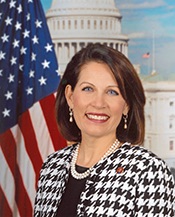
Bachmann’s campaign started with promise. She was a favorite among Tea Party conservatives and won the Ames Straw Poll in Iowa, a key early indicator of a candidate’s strength. Her popularity was fueled by her strong conservative stances, charismatic public speaking, and her ability to galvanize the Republican base. In fact, at one point in the race, she was seen as a legitimate contender for the nomination.
However, despite her initial popularity, Bachmann’s campaign faltered. The crowded field of candidates, which included more established figures like Mitt Romney and Rick Perry, made it difficult for her to maintain momentum. Romney, though unpopular with some conservative voters, ultimately had more resources and broader appeal across the party. Bachmann’s support dwindled after a series of gaffes and strategic missteps, and she ended her campaign after a poor showing in the Iowa Caucus.
Romney went on to secure the Republican nomination, but his campaign’s challenges, particularly in connecting with conservative voters, left some Republicans wondering what might have been if a candidate like Bachmann had gained more traction. Despite her early success, her campaign is a reminder of the complex dynamics of presidential primaries, where popularity in certain circles doesn’t always translate to overall success.
Why Haven’t We Elected a Woman President Yet?
So, why have women succeeded in Congress and governor’s offices but not yet in the presidency? The answer lies in a mix of historical, cultural, and electoral factors.
First, the presidency is a singular and highly visible position, unlike a congressional seat or governorship, which are more numerous and varied in scope. The role of Commander-in-Chief brings with it certain cultural expectations and gender stereotypes that can be hard to overcome. Historically, leadership traits associated with men, such as toughness and assertiveness, have been seen as necessary for the presidency, while women have had to navigate the fine line of being seen as both competent and likable.
Second, the Electoral College system and the primary process add layers of complexity to the path to the presidency. Women candidates often face greater scrutiny and have to appeal to a broad coalition of voters across diverse states, a challenge that has proven difficult even for well-qualified candidates.
Finally, while women have made tremendous strides in other areas of politics, the presidency remains the final frontier. It is often seen as the ultimate test of whether a candidate can break through entrenched barriers and unite a divided electorate. However, as younger generations become more politically active and gender norms continue to evolve, the likelihood of a woman being elected president grows.
Looking to the Future
The history of women running for president is a testament to the progress that has been made, but it also highlights the challenges that remain. From Victoria Woodhull to Hillary Clinton, these women have paved the way for future generations. As more women gain political experience and demonstrate their ability for effective leadership, the question is not if, but when, the United States will elect its first woman president. One hurdle is that not everyone is aware of just how much women have already achieved.
Many countries have already elected women as heads of state or government, which shows that it is possible. The U.S. may eventually follow this global trend as cultural and political barriers continue to fall.
In the end, each woman who has run for president has contributed to breaking down the barriers that have long kept women from the Oval Office. With every campaign, they have brought us one step closer to the day when a woman will take the oath of office and serve as President of the United States.
 Blue Skies and Green Pastures
Thanks for the history lesson, Paula. 🙂 When you mentioned other countries, I immediately thought of Margaret Thatcher. What a great lady.
It’s going to be an interesting few months, isn’t it?
Everything about this election is just so strange! I’m glad you liked the history lesson. I didn’t remember Michele Bachmann running. I wasn’t really that into politics back then. I asked my husband “Did we vote for Romney?” . I couldn’t even remember. 😁 but I’m bothered that good women get pushed off the ticket. And we end up with Kamala.
A lot of good people get ripped to pieces in politics, which is why we have so few… 😕
I agree, the history lesson was very informative.
No matter how the election pans out there’s going to be a lot of finger pointing and blame-game playing. It’s sad & scary.
What exactly would be better for YOU if a woman was President?
For Europe I can say: Been there, done that.
Europe
Chancellor Angela Merkel: A disaster.
EU President Ursula von der Leyen: A disaster.
Georgia Maloni (Italy’s PM): Mixed results so far.
Margaret Thatcher (British PM): Smashing success.
India:
Indira Ghandi (PM): very mixed resuts, including multiple wars and a massacre.
Frankly, I don’t care that our company’s CEO is a woman.
As long as she does a good job, I’m happy.
I view politics the exact same way: Competence first.
What good is it for me as a man, if another man is the boss if he’s incompetent or destructive?
I can’t understand why women would see it any other way.
What good is it for you as a woman if you have an incompetent or destructive woman at the top?
I agree with you. This was more of an exploration of the idea that we may have had some possible good ones who were kept from the ticket simply because they were women. Look at how bad the men who were nominated have been . The whole process of choosing leader is just bad .
Thanks for the clarification.
Yes,, this this applies for both men and women.
I submit to you that they were not kept from the ticked because they are women but precisely because the are good.
The system prefers the type of politician who can be manipulated.
Weak candidates who know that they owe their position not to merit but to favors are easier to control and manipulate.
You’re right. What do you think of what’s happening with the AfD ?
The AFD is getting stronger.
This is good and it is part of a global trend of a resistance against the painful results of the exreme policies of the globalist elites.
Of course, like all other parties/movements that are opposed to the globalist’s agenda like the extreme climate policies, energy policies, the flooding with massive waves of illegal immigrants, woke insanity and needless wars like Ukraine, they are demonized as extreme right-wing, fascists and nazis.
However, if one looks at their party program, they have the same positions that the CDU (Christian Democratic Union), Germany’s “conservative” party used to have 20 years ago but because the CDU moved so far to the left, many voters lost their political home and vote for AFD.
To a smaller extend this is true for the SPD, the other former great party.
Unfortunately, while the shift is steady it is also slow.
That’s why it will take multiple election cycles till the AFD is strong enough on the federal level.
Germany has, like the US, a federal structure with the states and their goverments and a federal goverment.
The recent elections were state elections in two states in the eastern part of Germany (former GDR).
The wins of the AFD were so impressive that it shocked the establisment,
I’m certainly reading a lot about it . People are fed up .
Yes. I hope Trump wins. It would strengthen the forces of sanity in the rest of the world.
I can’t click on any “like” buttons for your comments, but it’s an interesting discussion, and I agree with pretty much every point you both make.